Split solar street lights
from real street-light series.
Split solar street lights for road, campus, compound and municipal sourcing programs. Each module now starts from the catalog family that best supports the buyer's problem: full-screen for core roads, four-side and double-side for wider coverage, 8700 for service and proof review, and complete kits for light-plus-pole sourcing.
Model data is based on the current company brochure. Final lumen output, IP rating, battery chemistry, warranty, MOQ and lead time still require model-file confirmation during RFQ.
Product type
Split solar street light
Catalog scope
78 split street-light entries
Best fit
Road / campus / compound / project kits
Why choose split
Start with the real series, then confirm the site.
The current catalog supports several split street-light formats. Each module below uses the series that best expresses that buying problem, so the visual is not just decorative.
Road direction does not face the best sun
Trees or buildings create shade risk
Battery and controller need service access
Project files are needed before approval
Split architecture
Use the series to
narrow the project.
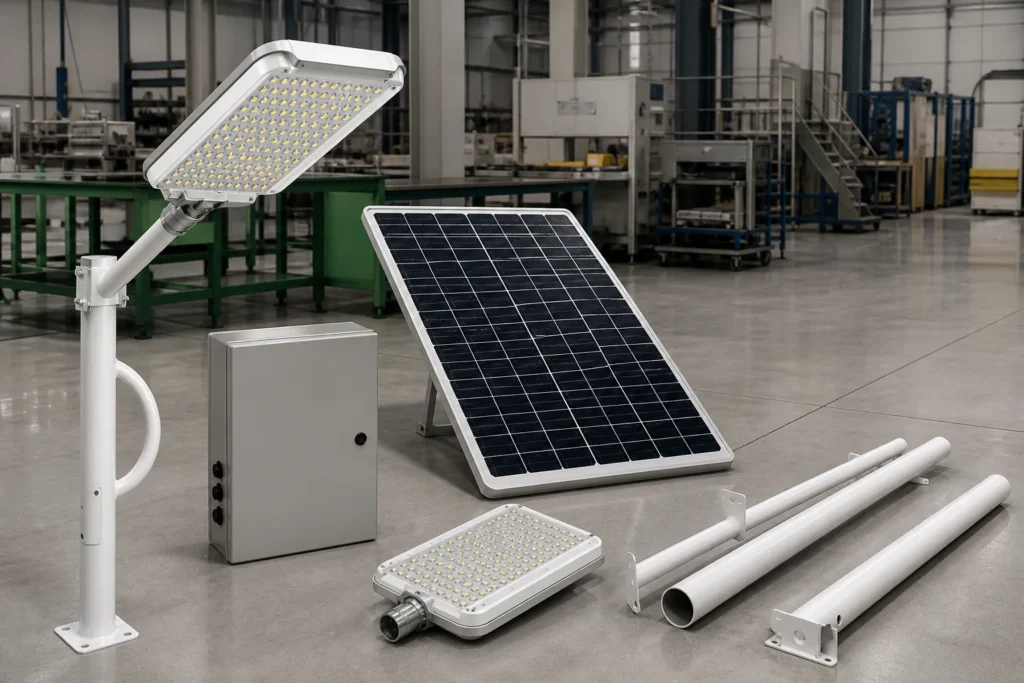
A useful split-street-light page should not invent one generic SKU. It should choose the strongest catalog family for the job first, then ask for road width, pole height, quantity and document needs before quotation.
Fixture family
Use 4301-4308 / 4100-4108 / 8701-8708 when the buyer needs a conventional road-light family.
Panel and battery tier
Use 4601-4610 or 2500-2512 when the application needs wider or two-side lighting, then match panel and 3.2V battery data by model file.
Pole and kit scope
Use 8801-8808 complete sets when the buyer wants light plus pole sourcing in one RFQ.
Document check
Use the selected series as the handoff point for datasheet, installation file, certificates, warranty, MOQ and lead-time confirmation.
Product series
Compare available
split series before RFQ.
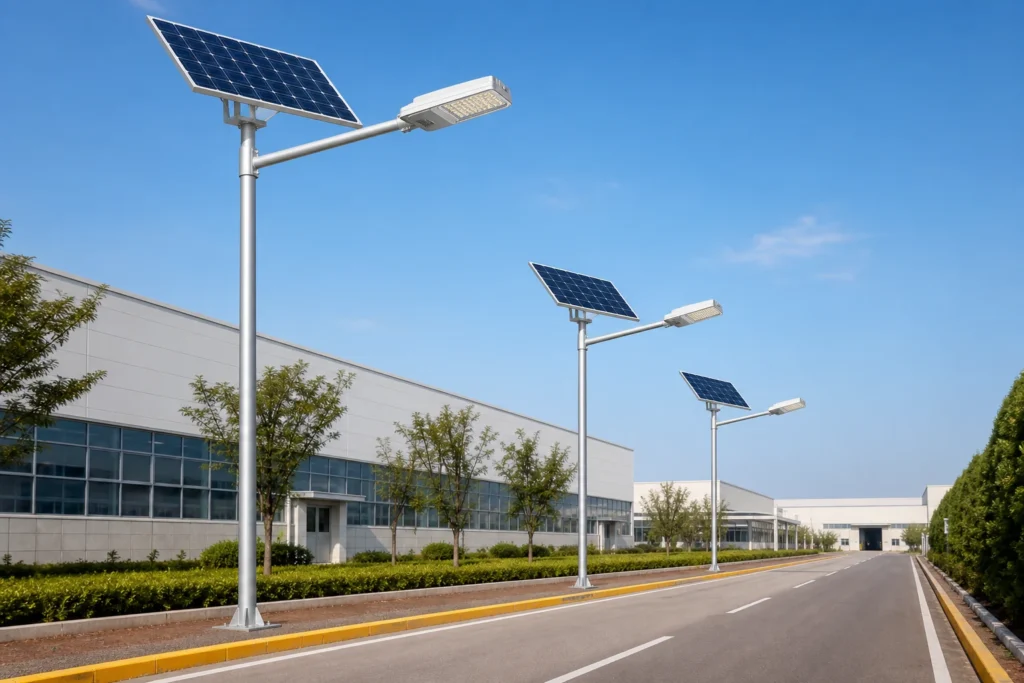
These cards are the page’s selection logic: use the strongest catalog family for the buyer’s road type, not a random product photo.
4301-4308 / 4100-4108 / 8701-8708
Core split street light families
Full-screen, single-side and 8700 families
35W-500W catalog brightness classes
2.5-8 m mounting range by model
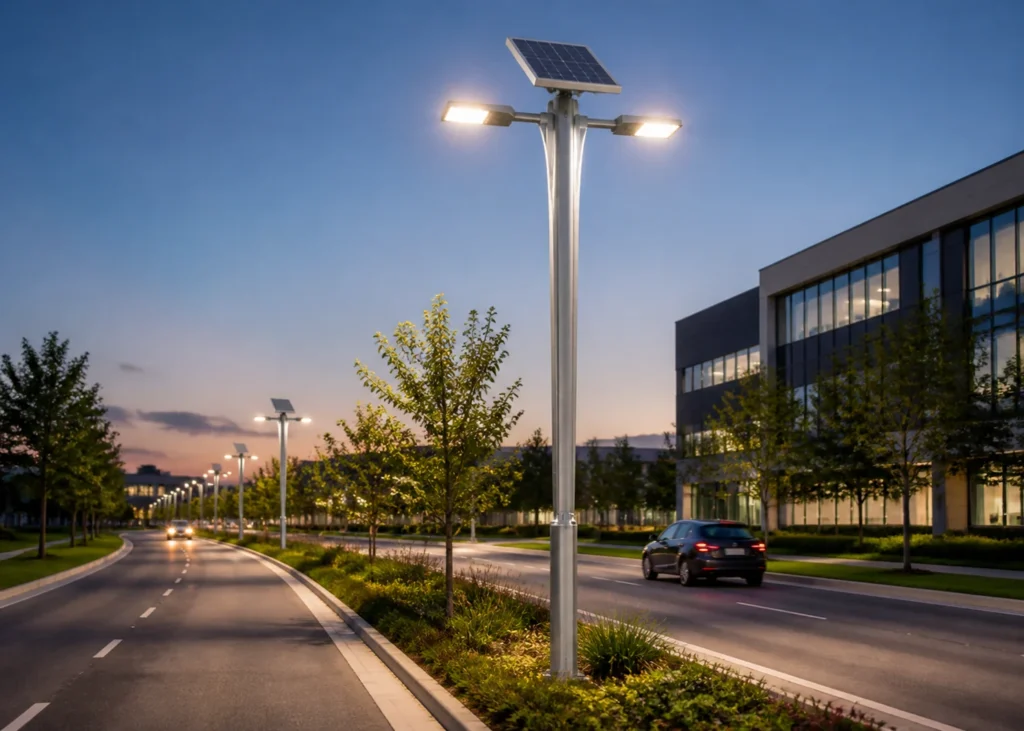
4601-4610 / 2500-2512
Four-side and double-side options
Wider or two-side lighting formats
30W-300W catalog brightness classes
Road, campus and public-area routing
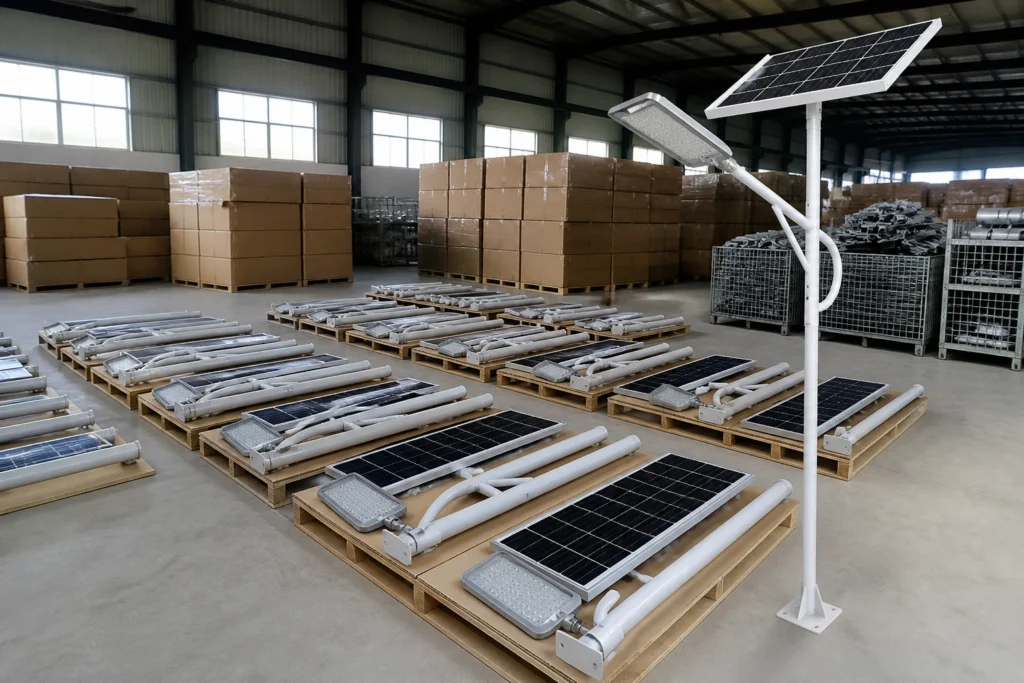
8801-8808 complete sets
Complete light and pole packages
Light plus pole sourcing path
3-8 m project set range
Useful for EPC and municipal RFQs
| Buyer check | Core Road Series | Wide Coverage Series | Complete Kit Series |
| Included series | Full-screen, single-side and 8700 | Four-side and double-side | 8801-8808 complete sets |
| Catalog model codes | 4301-4308, 8801-8808, 4100-4108, 8701-8708 | 4601-4610 and 2500-2512 | 8801-8808 with pole package |
| Brightness classes | 35W-500W depending on series | 30W-300W depending on series | 130W-500W |
| Mounting height range | 2.5-8 m depending on model | 2.5-7 m depending on model | 3-8 m |
| Light mode shown | Mostly sensor plus constant light | Four-side: sensor plus constant; double-side: constant | Constant light |
| Solar panel range | 12W-120W catalog panel options | 12W-70W catalog panel options | 35W-120W catalog panel options |
| Battery range | 10AH-100AH 3.2V in listed models | 5AH-60AH 3.2V in listed models | 30AH-100AH 3.2V |
| RFQ handoff | Ask for model datasheet and application fit | Confirm lighting direction and selected fixture format | Confirm pole, foundation and logistics requirements |
Specification parameters
Use real catalog ranges, then confirm the exact model.
The brochure gives useful selection ranges for split street lights. Public copy should use these ranges carefully and avoid unconfirmed lumen, IP, runtime, warranty, MOQ or lead-time claims.
78
Split street-light entries
From brochure model table
30W-500W
Catalog brightness classes
Confirm exact output
2.5-8 m
Mounting range
Confirm by project
3.2V
Battery voltage shown
Chemistry to confirm
| Parameter | Draft value / range | Proof status |
| Fixture format | All-in-one integrated street light | Product family |
| Application | Local roads, campuses, compounds, pathways, distributor programs | Sample positioning |
| Mounting | 4–10 m pole height sample range; arm and bracket confirmed by model | Sample value |
| Solar panel / battery / controller | 45–150W panel, 256–960Wh LiFePO4, PWM/MPPT controller options | Sample value |
| Lumens / wattage / CCT / optics | 30–100W, 4,800–16,000 lm, 3000K / 4000K / 5700K sample options | Sample value |
| Runtime / autonomy / IP rating | 10–12h night profile, 2–3 rainy days, IP65/IP66 sample target | Sample value |
| Certifications | CE / RoHS / test report package can be prepared by model and destination market | Sample commercial field |
| Warranty / MOQ / lead time | 2–5 year warranty options; 30–50 pcs MOQ sample; 20–30 day lead-time sample | Sample commercial field |
| Packaging / private label | Neutral carton, logo label, color box, manual and pallet plan available for review | Sample commercial field |
Engineering support
Engineering files for
split projects.
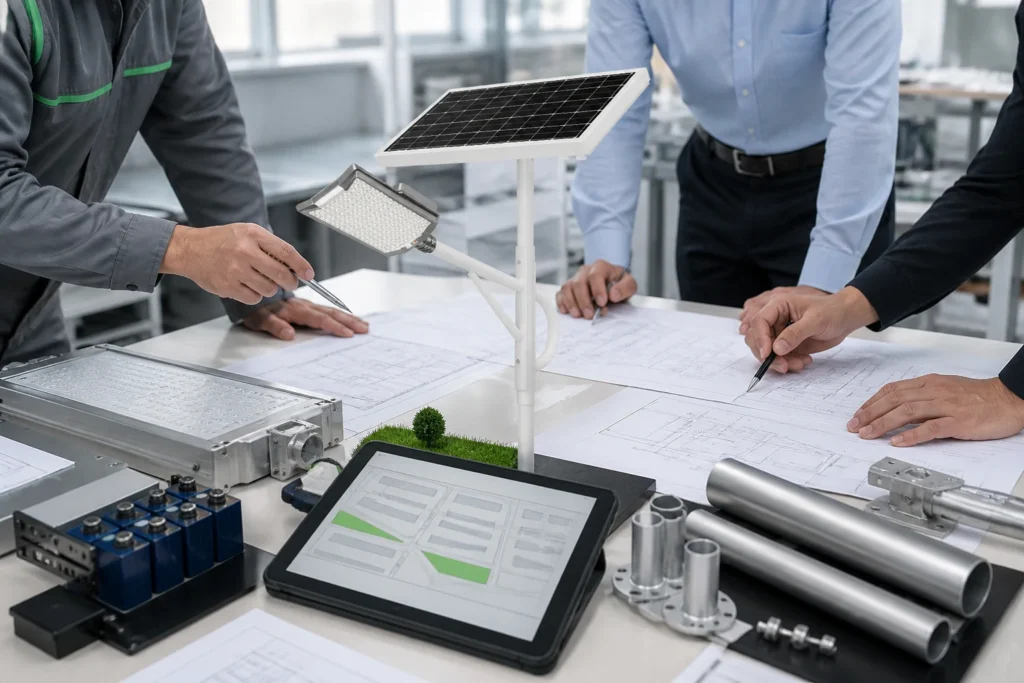
Split projects need a practical bridge between catalog series and project approval. The page now starts from the best-fit family, then moves to files, layout, pole scope and commercial confirmation.
Series-to-model mapping
Full-screen and single-side families handle conventional road selection; four-side and double-side families handle wider or two-way lighting questions.
Layout and pole review
Complete-set 8801-8808 is the preferred starting point when pole, foundation and logistics are part of the RFQ.
Panel and battery check
Panel size, panel power and 3.2V battery capacity stay tied to the chosen brochure family and exact model file.
Document handoff
8700-style proof visuals support the QA conversation, while exact IP, runtime and warranty claims remain model-file dependent.
Certification & assurance
Proof is confirmed by model.
Project buyers need proof without guessing. The 8700 family is useful for proof-oriented review visuals, but files and terms still stay tied to the exact model and destination market.
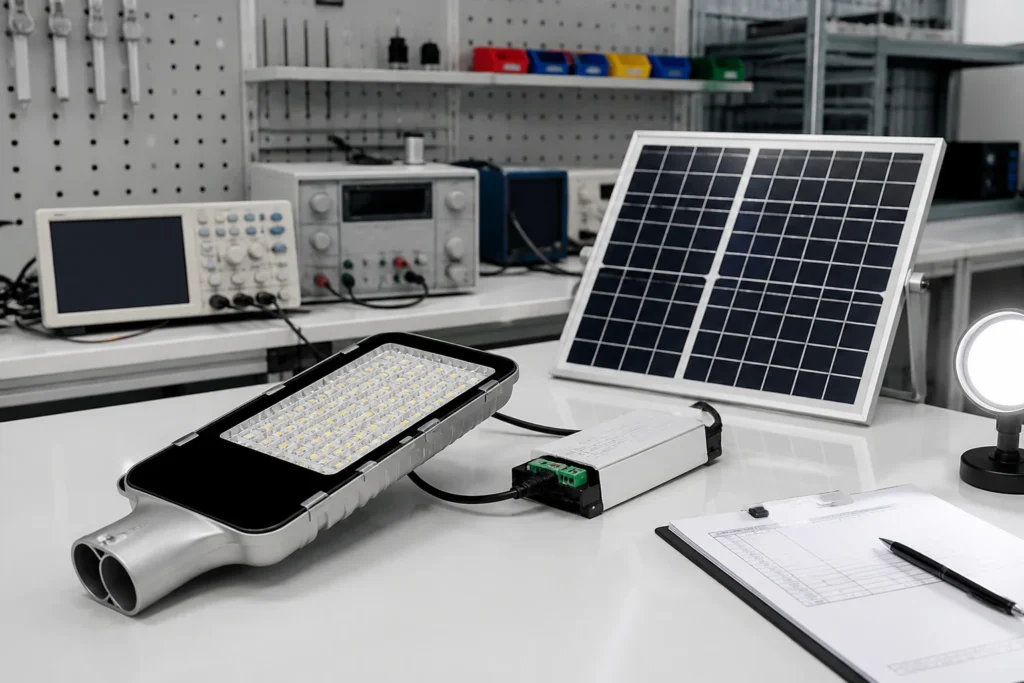
Certification package
Confirmed by model and destination country.
Warranty and terms
MOQ, lead time, packaging and payment terms are confirmed during RFQ.
Performance evidence
Output, battery, panel, IP rating and runtime are checked against records.
Approval documents
Datasheets, installation files and tender support files are prepared when available.
Manufacturing & QC
Split system
QC touchpoints.
Quality control focuses on component matching, wiring and document alignment.
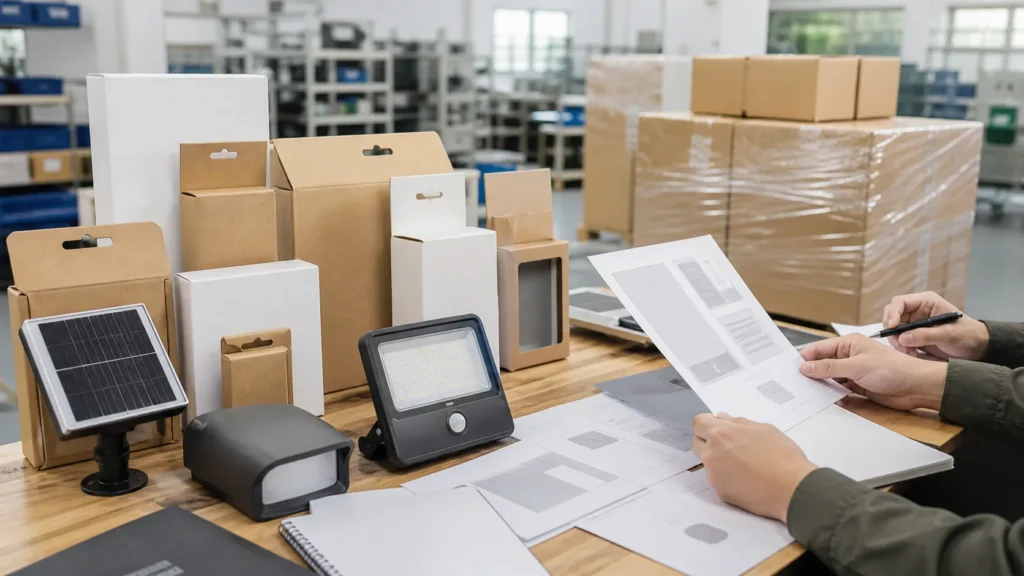
Series and model check
The selected product family, model code, lamp head, solar panel and battery capacity are matched before quotation.
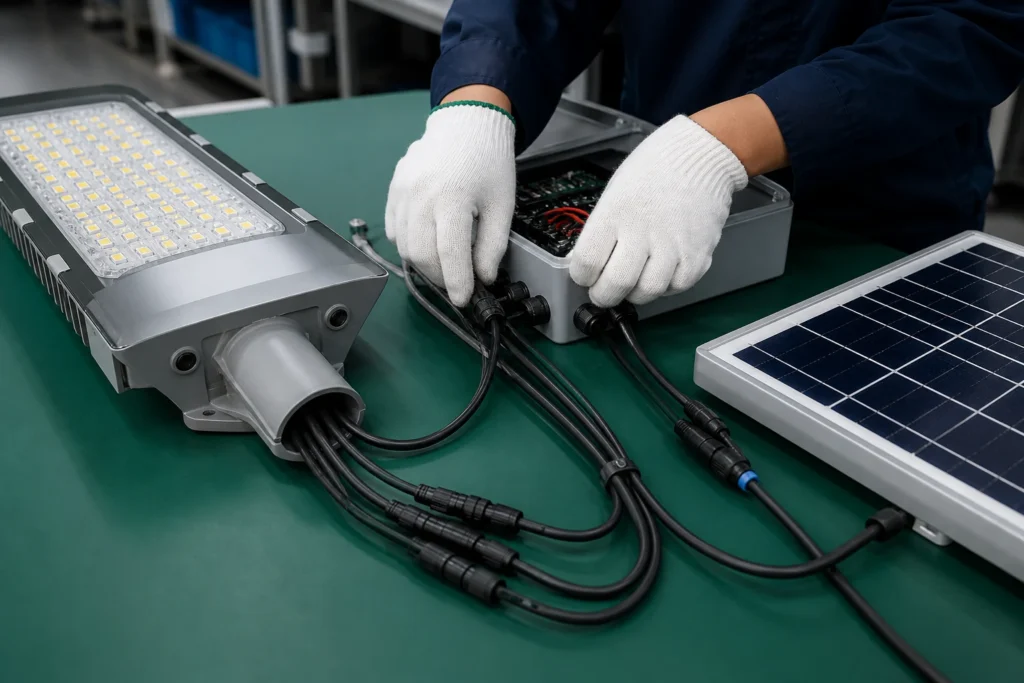
Assembly and wiring review
Fixture, panel, battery, controller and cable route should be reviewed as one split lighting system.
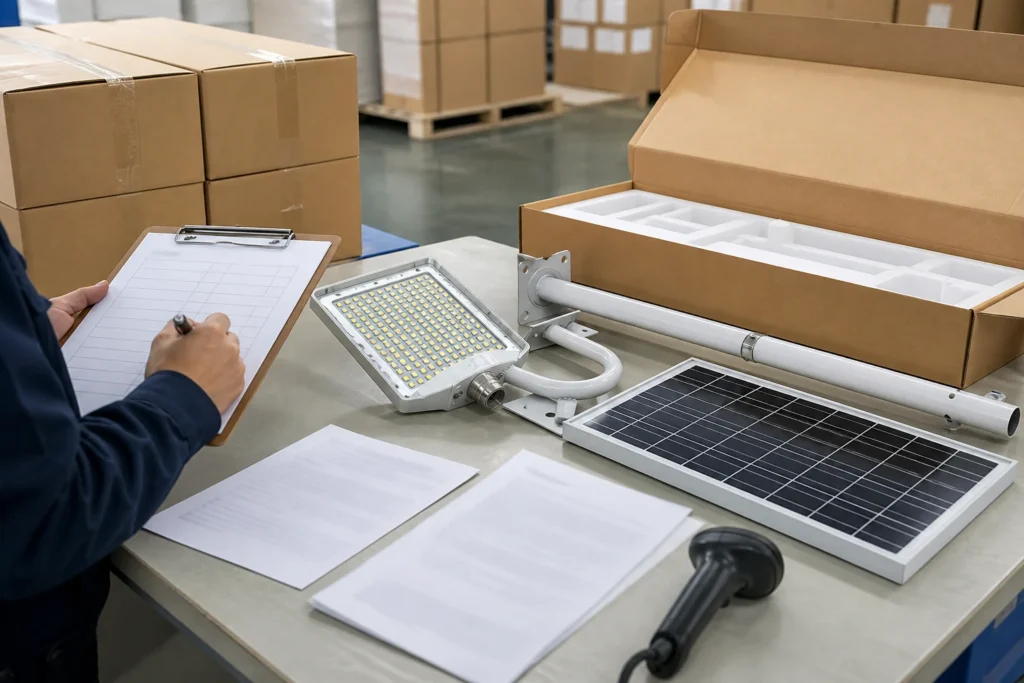
Documentation control
Model tables, installation files, packaging needs and commercial terms stay aligned with the exact RFQ.
Buyer questions
Split questions
start with series and site fit.
Which split series should I ask for first?
Start with road width, pole height and application. Sales can then recommend full-screen, four-side, double-side, single-side, 8700 or complete-set options.
Can I compare real model ranges on this page?
Yes. The page shows brochure-backed ranges for brightness class, mounting height, panel size and 3.2V battery capacity, then sends exact-model checks to RFQ.
What should I send before quotation?
Share site photos or drawings, pole height, road width, quantity, destination market and any certificate or OEM requirements.
Can these products support parking lots or municipal roads?
They can be reviewed for those applications, especially higher-output split and complete-set options, but the final layout and model choice should be confirmed by project data.
RFQ inputs
Send the series and site requirement first.
Useful split RFQ message fields
Target series: full-screen, four-side, double-side, single-side, 8700 or complete kit
Road width, pole height, pole spacing and installation environment
Quantity, destination country and buyer role
Operating profile or control preference: sensor plus constant light or constant light
Required datasheet, certificate, drawing, packaging or OEM document

01 Preferred series or model code if known
02 Road/site layout or photos
03 Pole height, road width and spacing if available
04 Quantity, destination market and project stage
05 Requested datasheet, certificate, installation file or OEM package