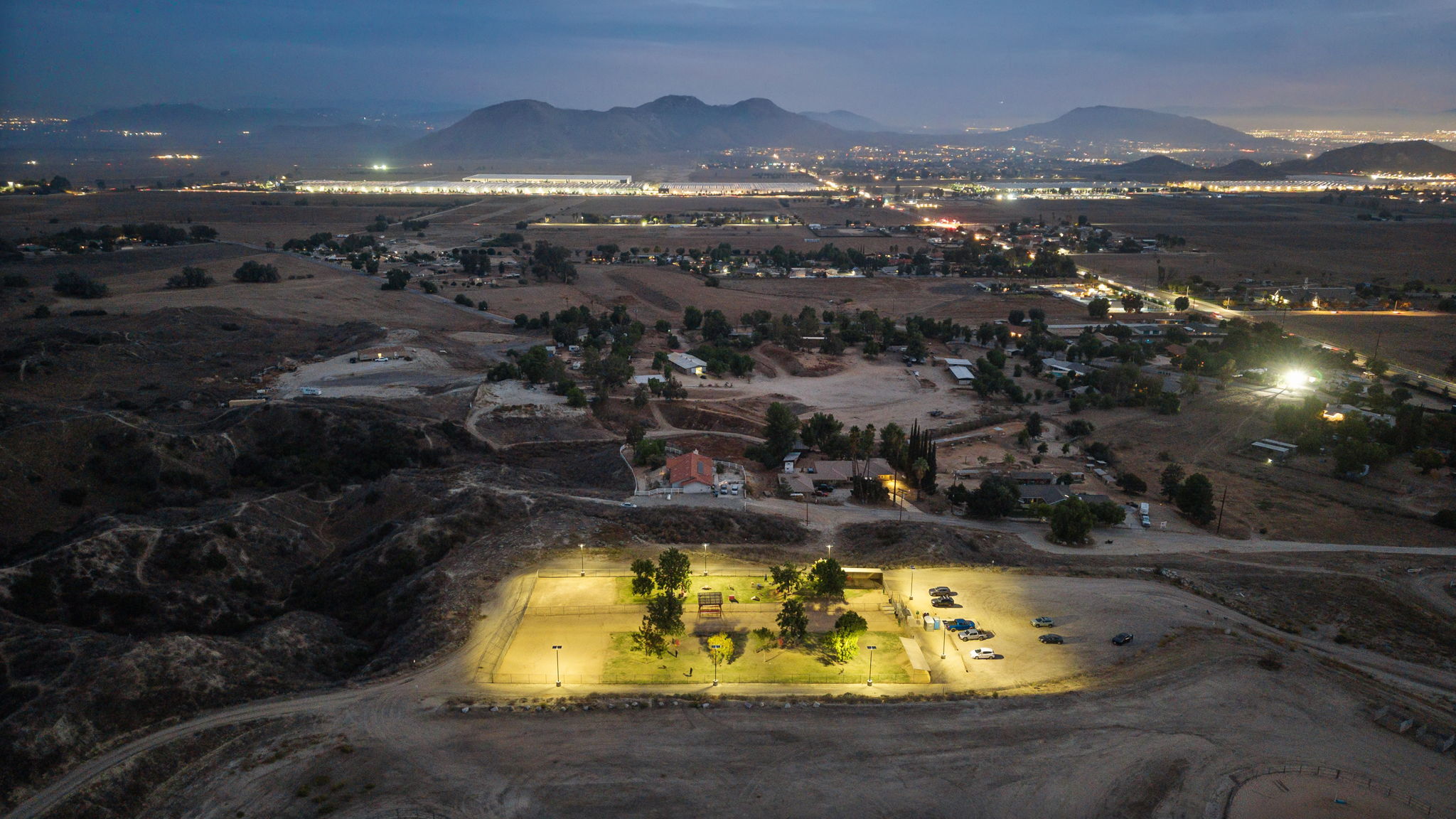
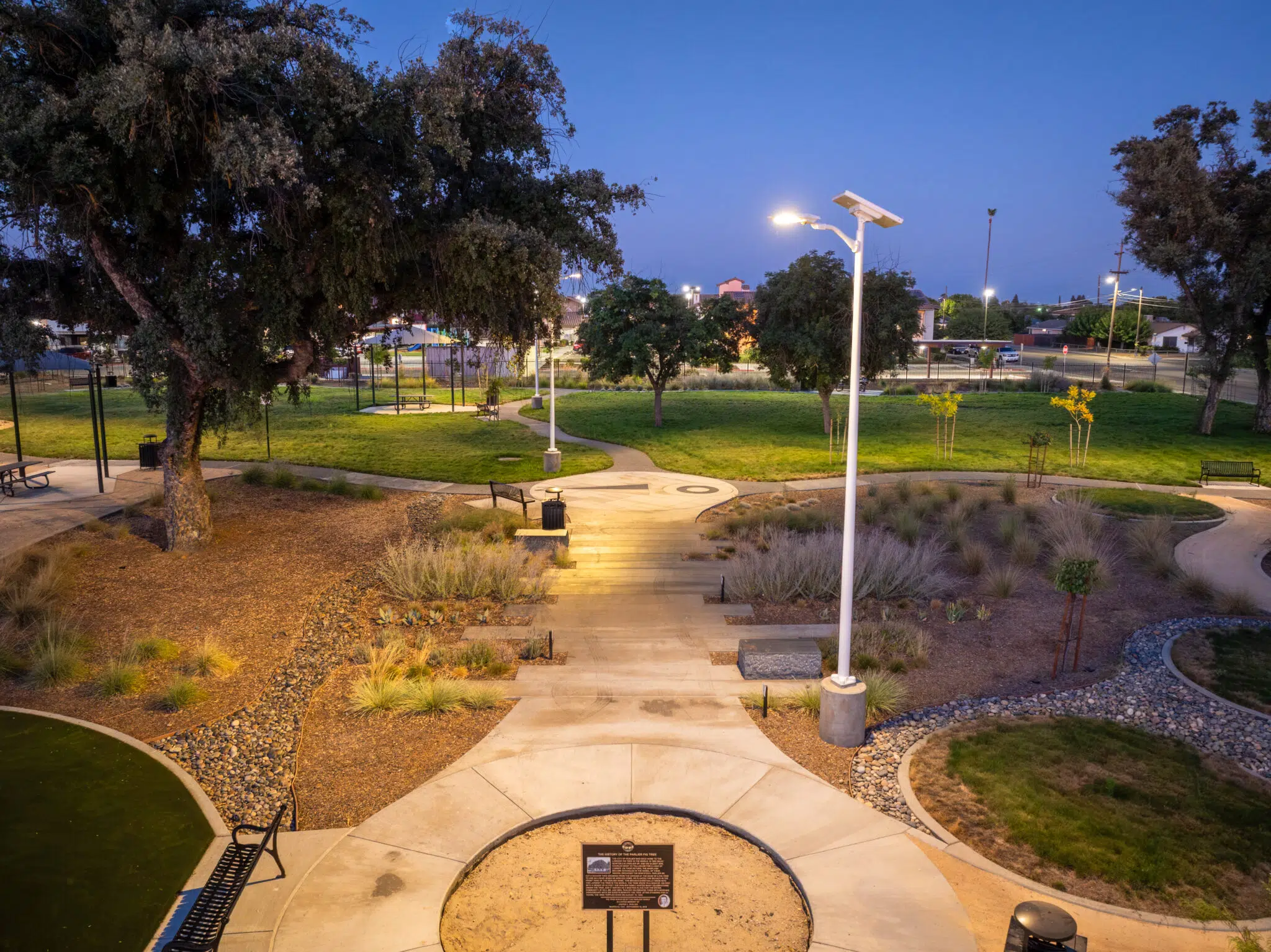
Here at Sol, we love a good lighting spec sheet. The tables, the data, the line drawings, the satisfying specificity of it all. A spec sheet can tell you how many lumens a fixture produces, how much energy it takes to do it, what colour temperature it emits, and how long it’s expected to last.
But useful as they are, specs don’t tell you everything. They can’t predict whether light will reach the far corners of a parking lot, whether a pathway will have dark gaps between poles, or whether a fixture will create more glare than visibility. That’s because spec sheets describe individual fixtures, not how an entire lighting system will perform in the real world.
To understand that, you need a photometric layout: a site-specific plan that shows how and where light will fall before a single pole is installed.
What a photometric layout shows
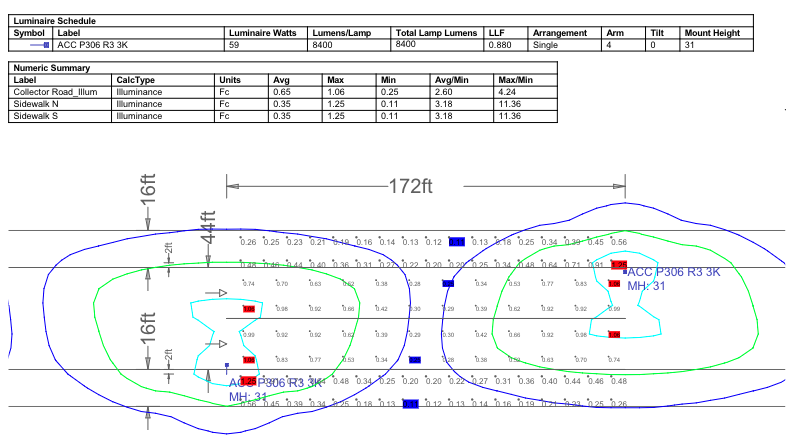
At first glance, a photometric layout can seem a little intimidating: a jumble of numbers, colors, and lines that look more like a storm tracker than a lighting design. Those numbers and lines aren’t random. They provide important information about how light is expected to behave in a space.
A photometric layout takes the performance data from a fixture—the stuff you find on a spec sheet—and applies it to a specific area. It accounts for things like pole spacing, mounting height, fixture output, angle, and distribution. In other words, it turns “this fixture makes light” into “this is where the light will go, how bright it will be, and how evenly it will be distributed.”