Solar landscape lights
built as a product line.
Build a coordinated commercial range for contractors, property projects, distributors and OEM brands. Start with product roles, then align form, control and channel presentation.
Final models, ratings, packaging and commercial terms are confirmed by approved files and samples.
Page intent
Build a landscape product line
Review first
Roles, form, control and package
Buyer path
Project mix or channel range to RFQ
Who it serves
One range. Different buying jobs.
The right product mix depends on who is selecting it and how the range will be installed, sold and maintained.
Landscape contractors
Hotels and property projects
Community and real-estate teams
Distributors and OEM brands
Product-line architecture
Give every
fixture a role.
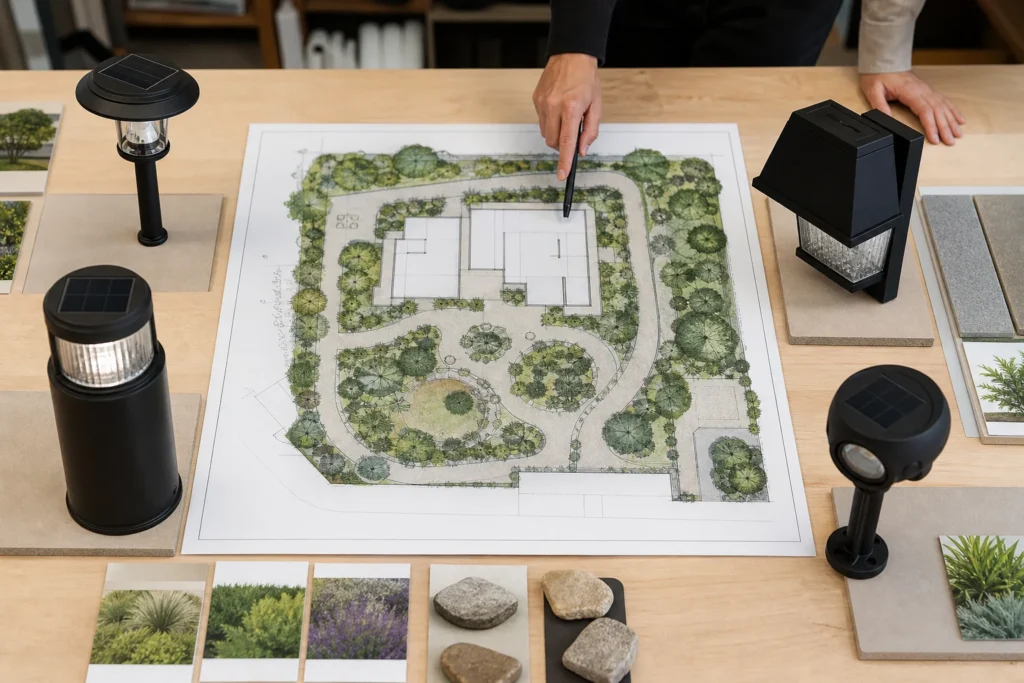
A useful range covers different site points without filling the catalog with near-duplicates. Start with the lighting job, then coordinate the visual and commercial system.
Pathway and garden points
Low-level fixtures guide short routes, planting edges and small amenity areas.
Bollard guidance
Pedestrian-scale fixtures establish route rhythm, turns and landscape boundaries.
Wall and entrance points
Wall-mounted products cover doors, facades and service-side exterior points.
Range rules
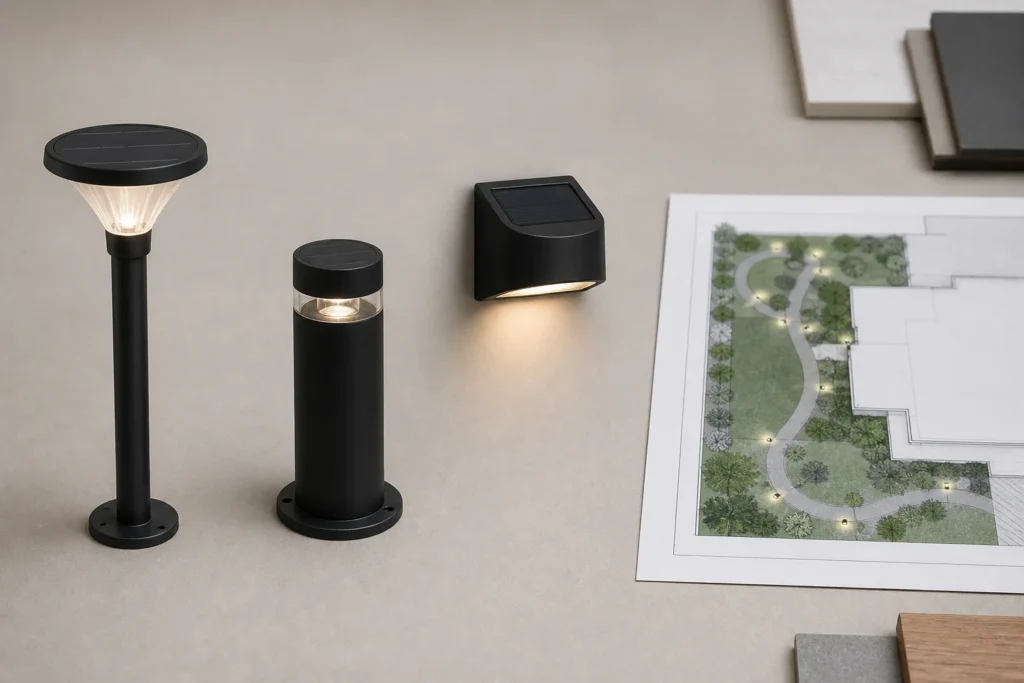
Shared form language, finishes, control behavior and document structure make the mix feel intentional.
Range paths
Choose the mix by
buying objective.
These are range structures, not model numbers. Final products and availability remain tied to the approved catalog, samples and factory files.
01 / Site essentials
Cover the core outdoor points
Pathway, bollard and wall roles
Short project schedule
Layout and mounting review

02 / Property package
Coordinate one managed site
Routes, entrances and amenity areas
Form and finish coordination
Sample approval before order
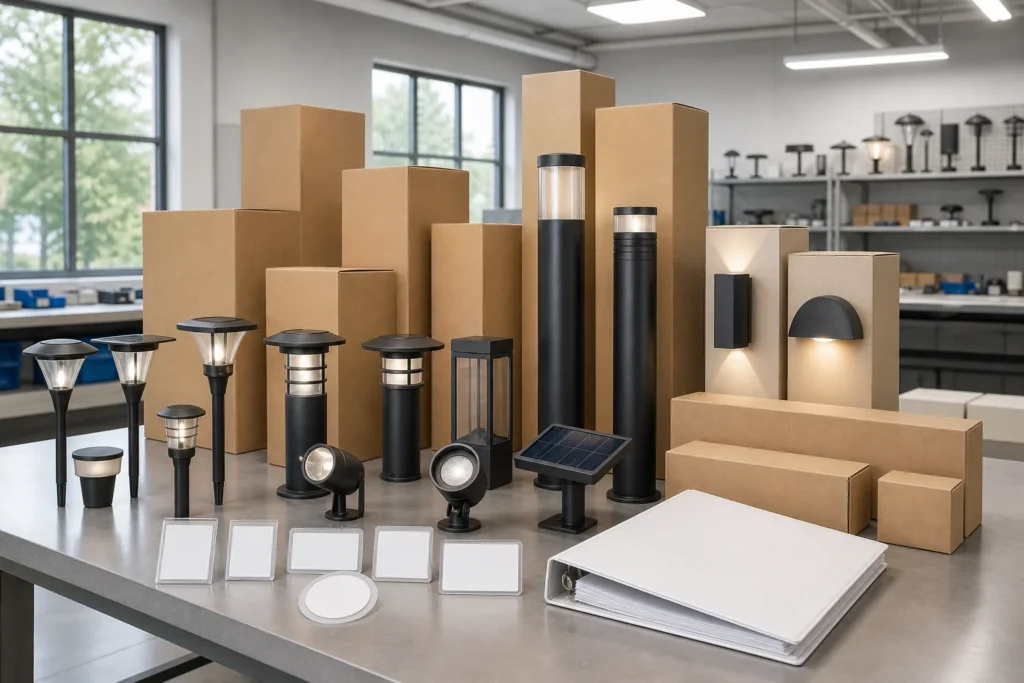
03 / Channel range
Build a distributor or OEM line
Clear product roles
Catalog and packaging system
Forecast and mixed-order review
| Buyer check | Site essentials | Property package | Channel range |
| Primary objective | Complete a site package | Coordinate a property | Build a sellable range |
| Product roles | Pathway + bollard + wall | Route + entrance + amenity | Core line + optional extensions |
| Main review | Layout and mounting | Appearance and site consistency | Assortment, samples and channel package |
| Commercial handoff | Project quantity and schedule | Approved sample and phased quantity | Forecast, packaging and private-label scope |
Specification parameters
Confirm the range as a system.
Each product keeps its own model file, but the line also needs shared rules for appearance, control, documentation and channel presentation.
Roles
No near-duplicates
Confirm by range map
Appearance
One visual family
Confirm by samples
Control
Clear behavior
Confirm by model files
Channel
Catalog and package
Confirm during RFQ
| Parameter | Draft value / range | Proof status |
| Fixture format | All-in-one integrated street light | Product family |
| Application | Local roads, campuses, compounds, pathways, distributor programs | Sample positioning |
| Mounting | 4–10 m pole height sample range; arm and bracket confirmed by model | Sample value |
| Solar panel / battery / controller | 45–150W panel, 256–960Wh LiFePO4, PWM/MPPT controller options | Sample value |
| Lumens / wattage / CCT / optics | 30–100W, 4,800–16,000 lm, 3000K / 4000K / 5700K sample options | Sample value |
| Runtime / autonomy / IP rating | 10–12h night profile, 2–3 rainy days, IP65/IP66 sample target | Sample value |
| Certifications | CE / RoHS / test report package can be prepared by model and destination market | Sample commercial field |
| Warranty / MOQ / lead time | 2–5 year warranty options; 30–50 pcs MOQ sample; 20–30 day lead-time sample | Sample commercial field |
| Packaging / private label | Neutral carton, logo label, color box, manual and pallet plan available for review | Sample commercial field |
Engineering support
Give buyers the files needed to
approve and sell the range.
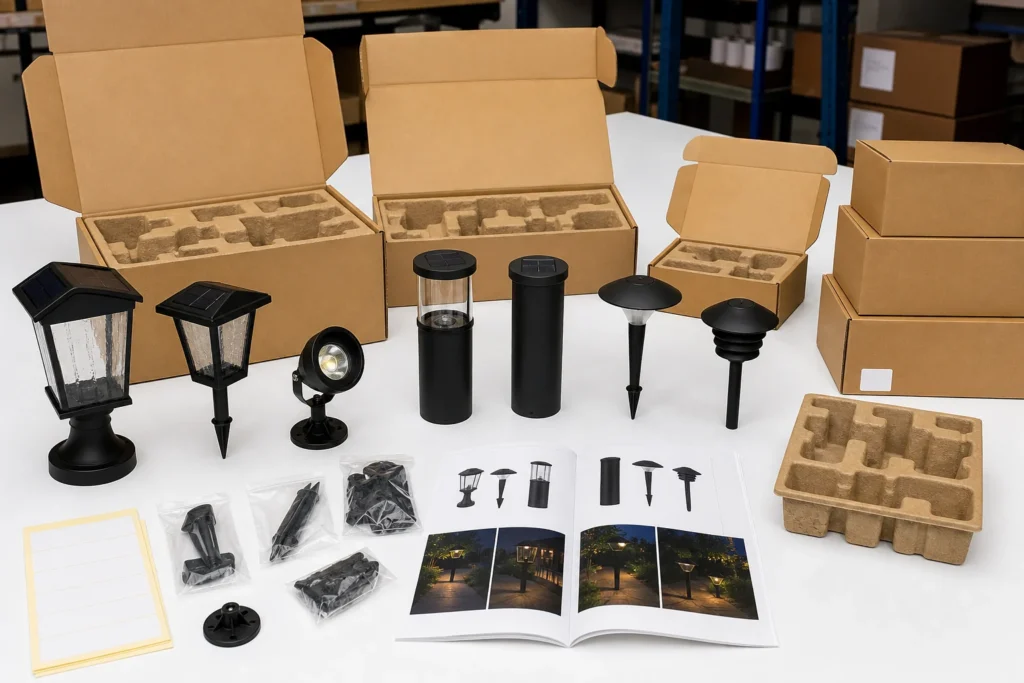
This section defines the deliverables: range structure, exact-model data, catalog assets and a usable mixed-order handoff.
Range map
Define the job of every family and remove near-duplicate products before sampling.
Model data
Keep dimensions, mounting, controls and performance tied to exact approved product files.
Catalog and packaging
Coordinate naming, images, labels, manuals, cartons and private-label elements.
Mixed-order handoff
Confirm model list, quantity by SKU, accessories, spare policy and production schedule.
Certification & assurance
Publish only claims tied to exact-model proof.
This section sets the evidence boundary. Shared presentation does not make technical or compliance claims transferable between products.
Exact-model files
Datasheets, dimensions, installation and control files are reviewed product by product.
Outdoor proof
IP, runtime, battery, panel and weather-performance claims require approved factory records.
Destination requirements
Certification and document packages are confirmed by model and target country.
Commercial approval
Samples, packaging, forecast, MOQ, lead time and warranty are confirmed during RFQ.
Manufacturing & QC
Control mixed models
before packing.
This section covers production accuracy: appearance, control references, quantities, accessories and order-file alignment.

Form and finish alignment
Visible geometry, surface finish and material references are checked against approved samples across the range.
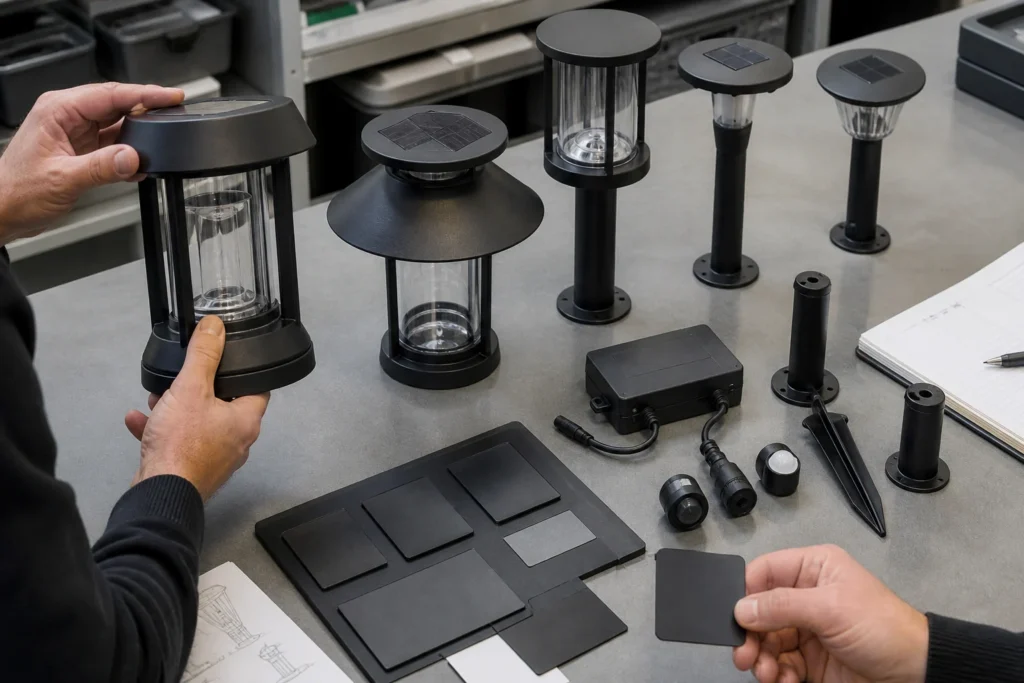
Finish and control review
Finish references, control components and model records are matched before product-line claims are used.

Mixed-order verification
Models, quantities, accessories and blank label positions are checked against the approved order file before packing.
Buyer questions
Questions before building the range.
Which products belong in a landscape lighting range?
Start with lighting roles: pathway and low garden points, bollard guidance, wall and entrance points, then add only products that solve a distinct project or channel need.
How do we keep several product types visually coordinated?
Review form language, scale, visible materials, finish references and light appearance together. Approve physical samples before catalog or project use.
Should every product use the same control mode?
Not necessarily. The behavior should match each lighting role, but the differences must be clear in model files, catalog content and buyer guidance.
What does an OEM landscape product line require?
Share the target market, desired product roles, forecast, sample priorities, logo scope, packaging, labels, manuals and required documents.
RFQ inputs
Send the range brief, not only a product photo.
Channel and approval details
Catalog structure and exact-model document requirements
Logo, label, carton, insert and manual scope
Mixed-order, spare, sample and launch-stage requirements
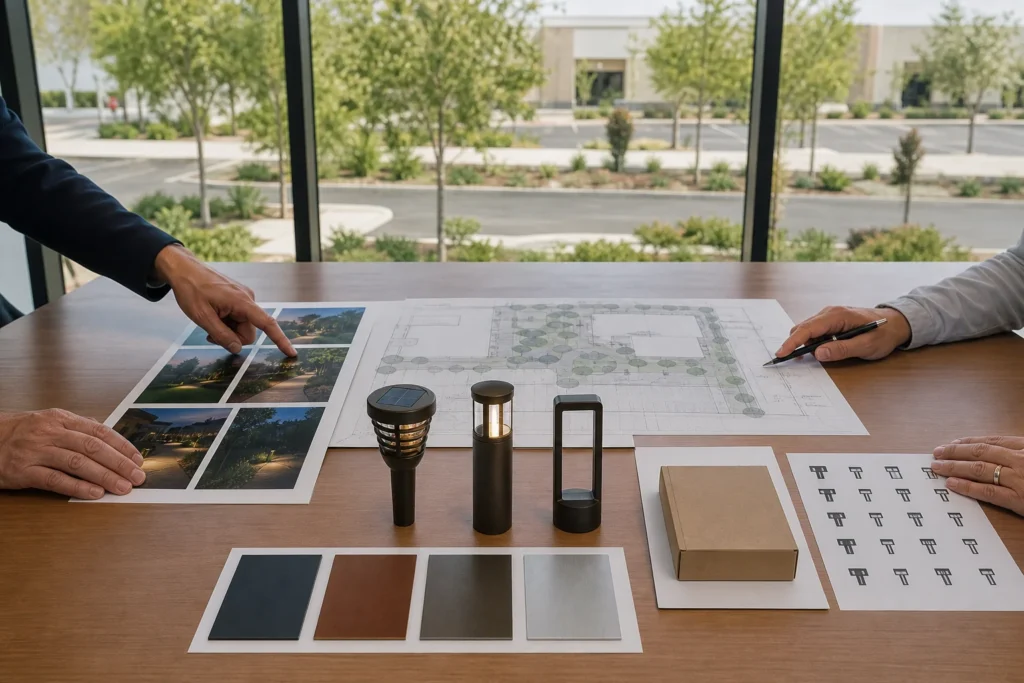
01 Buyer role: contractor, property project, distributor or OEM brand
02 Target application zones and required product roles
03 Preferred forms, finishes, control behavior and sample priorities
04 Quantity by family, forecast, destination market and target schedule